
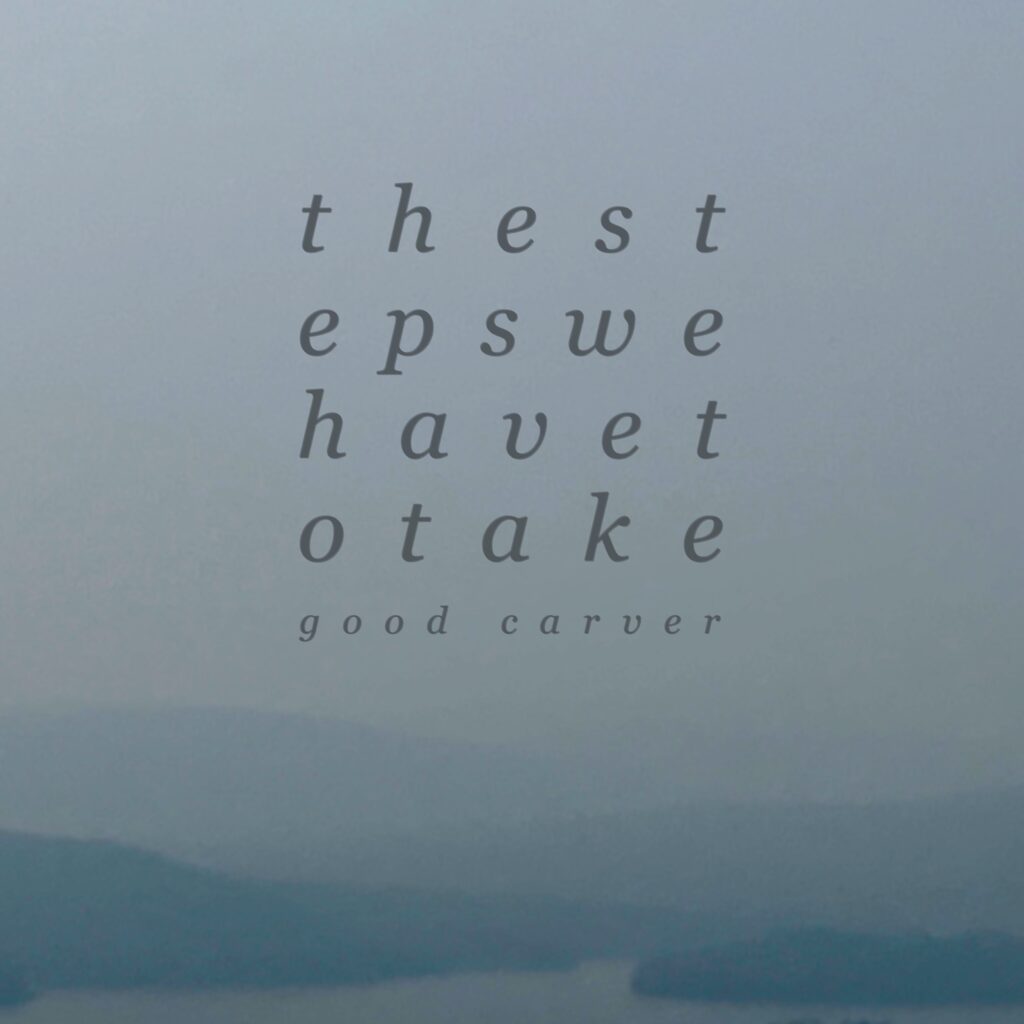
Look, I’ll be straight with you. When I first saw “indie folk” in the press release for Good Carver‘s debut album “The Steps We Have to Take,” I braced myself for another collection of whisper-quiet coffee shop confessionals. You know the type—songs so delicate they’d shatter if the drummer so much as looked at his kit the wrong way.
But then I actually listened to this thing.
And yeah, I had to eat my words.
Eric Bjella—the Fort Collins songwriter steering this ship—has delivered something that kicks you in the teeth while simultaneously making you think. And isn’t that what the best rock music does? It hits you in the gut and the head.
Let’s talk about the players here, because this isn’t just the Eric Bjella show—though he does pull serious weight on lead vocals, guitar, bass on five tracks, piano, and even some whistling and xaphoon (yeah, I had to Google it too).
The real MVP here is Lana Millard Waneka, whose cello cuts like a knife. Her backing vocals on “Calmer Waters” and “Questions (from Leon Trotsky Trout)” add this eerie, beautiful texture that most folk-rock bands would kill for. And she co-wrote the cello arrangements on five tracks—the woman’s fingerprints are all over this record, and thank God for that.
Alex Johnson deserves a shout too. His drum work on tracks like “Us Hunters” and “Too Late” (both recorded at Wise Acre Recording Studio) gives these songs a backbone that the quieter moments lean on. When he locks in with bassist Eric Smith—whose work at Little House of Sound on tracks like “Collecting Clouds” is seriously underrated—the rhythm section digs in like a band that’s been playing together for decades.
Special mention to Maxwell Tretter, who handled drums on “Take it Slow” at his own studio. That track swings in a way that makes you want to nod along whether you’re in the pit or behind the wheel.
And can we talk about the backing vocals for a second? Austin Kenneth Lee, Nathaniel Riley, Ian Foster—these guys show up and elevate tracks like “Collecting Clouds,” “Questions,” and “Too Late” from good to “wait, play that again” territory.
Bjella’s not hiding from the big questions here. The track came from a moment when his three-year-old daughter woke him up slapping his face to ask if all the doors were locked. And honestly, that image sticks with you through the whole record.
How do we move through uncertainty? What patterns do we inherit without realizing it? Are we living inside lines we didn’t draw?
Heavy stuff, right? But the music never feels like homework.
“Calmer Waters” opens the album with that killer cello line from Millard Waneka, and Bjella’s lyrics about watching how “her brood flies” and wondering if “we’ll teach our young to sing the songs we’ve always sung” hit different when you know the backstory. The drums from Johnson build underneath without overpowering—that’s the kind of restraint most bands learn after three records, not on their debut.
“Collecting Clouds” might be the closest thing to a straight-ahead rocker here. The rhythm section locks into a groove that feels almost like early R.E.M. if they’d grown up on Colorado mountain time. Austin Kenneth Lee’s backing vocals float through the chorus, and that line about becoming writers who “see right through the charade” is Bjella singing with a sneer that suggests he’s done playing nice.
“Questions (from Leon Trotsky Trout)”—yeah, that title’s a mouthful—brings Nathaniel Riley in on backing vocals, and the cello work from Millard Waneka gets downright menacing in spots. “Us Hunters” kicks the back half into gear with Bjella on bass and guitar, Johnson behind the kit, and Millard Waneka’s cello adding this mournful undertone.
“Sinking In” and “Too Late” form a devastating one-two punch. The latter brings Ian Foster in on backing vocals, and the cello arrangement (co-written by Millard Waneka) cuts deep. “Aimless Blues” lives up to its name—looser, rawer, Bjella on bass and guitar, Johnson keeping time. It’s the closest thing to a throwaway here, but even Good Carver’s throwaways have more soul than most bands’ singles.
The title track builds patiently, Bjella’s vocals front and centre, the band holding back until the moment they need to surge. And closer “Time to Go” sends you out on a high note—Bjella on bass and guitar, Johnson on drums, Millard Waneka’s cello tying a bow on the whole thing.
I’ve sat through a lot of debut albums. A lot. Most of them sound like bands figuring out what they want to be. “The Steps We Have to Take” sounds like a band that already knows—they just needed to prove it to everyone else. Good Carver has made a record that rewards attention. The kind you put on headphones for. The kind that reveals new details on the tenth listen. The kind that makes you want to call your friends and say “hey, you gotta hear this.”